

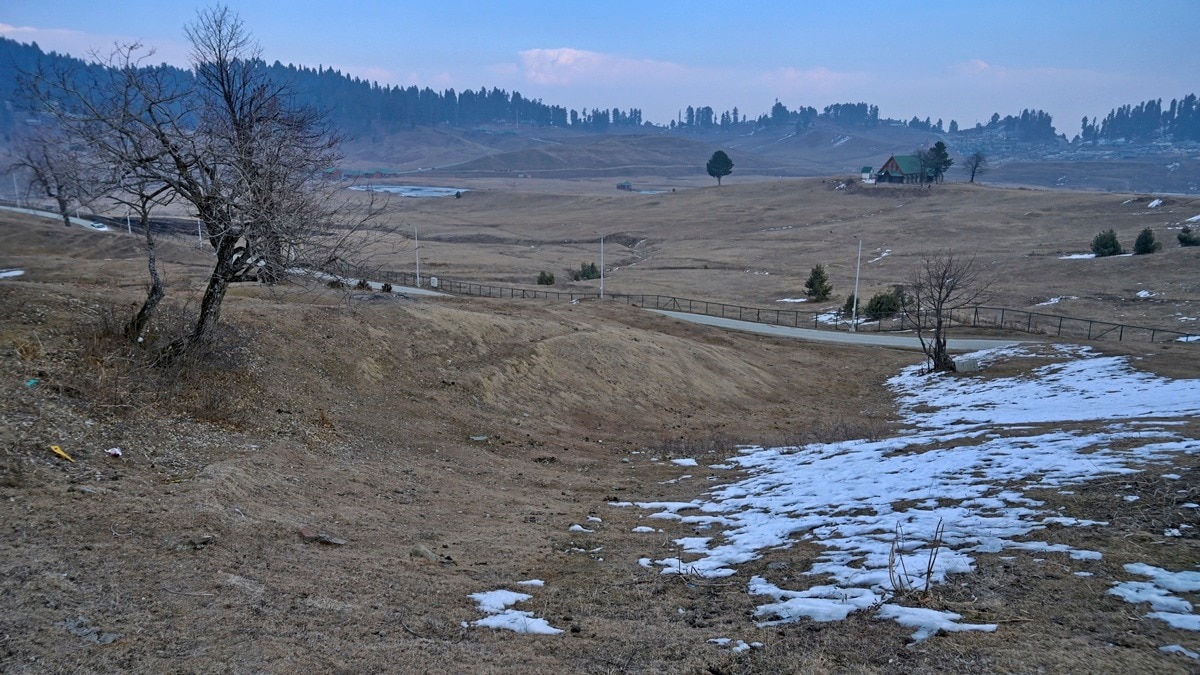
SRINAGAR, JANUARY 9 (KNO): Winter snowfall remains the backbone of Kashmir’s agriculture, horticulture and overall water security, experts have said, warning that a continued dry spell during the winter months could have far-reaching consequences for irrigation, drinking water supply and farm productivity across the Valley.
Agriculture specialists said that nearly 60–70 per cent of orchards in Kashmir are rain-fed, making them heavily dependent on winter snowfall and subsequent spring rains. In the absence of adequate snow accumulation or sufficient winter precipitation, the region faces a high risk of water scarcity during the crucial summer months, impacting farming, domestic water availability and allied sectors.
Speaking to Kashmir News Observer (KNO), environmental expert Dr Mudasir Ahmad Dar, Lecturer in the School Education Department, said winter snowfall plays a decisive role in sustaining agriculture and horticulture in Kashmir.
“Snowfall acts as a natural reservoir. When it melts gradually during spring and summer, it ensures steady water availability for crops, orchards and drinking purposes,” he said.
Dr Dar expressed concern over the below-normal or absence of snowfall witnessed so far this winter, cautioning that it could translate into acute water stress later in the year. “If snowfall remains deficient, water-intensive crops like paddy will be the worst hit. Paddy cultivation depends heavily on assured irrigation, and any disruption in water supply can severely impact both yield and livelihoods,” he added.
However, he noted that it is still early to draw firm conclusions, as February, March and April are traditionally wet months in Kashmir. “Adequate rainfall or snowfall during this period can still help replenish water sources and compensate for the current deficit,” he said.
Dr Suhaib A Bandh, Assistant Professor of Environmental Science at S P College Srinagar, said prolonged dry weather poses a serious threat to orchards and fruit crops, which form the economic backbone of the Valley. “Dry spells disturb natural irrigation cycles, reduce soil moisture and weaken trees, making them more vulnerable to pests and diseases,” he said.
He explained that insufficient winter moisture adversely affects root development and flowering, ultimately impacting fruit size, quality and overall production. “Apple, pear and other fruit crops are particularly sensitive to moisture stress during critical growth stages,” he added.
Dr Bandh stressed the need for long-term adaptation measures, including strategic water management, promotion of drought-resistant crop varieties, efficient irrigation systems and climate-resilient agricultural practices.
Meanwhile, Dr Umar Mushtaq, scientist at Sher-e-Kashmir University of Agricultural Sciences and Technology (SKAUST), said it is difficult at this stage to precisely predict the impact of the current dry conditions on the next farming season.
“If sufficient precipitation occurs in the remaining winter days, the situation may still improve. However, a largely dry winter could affect fruit quality in the coming year, depending on other climatic and agronomic factors,” he said.
Experts warned that the impact of a snow-deficient winter extends beyond agriculture, noting that reduced snowfall could lower spring discharge in rivers, streams and springs, affecting drinking water schemes, hydropower generation and the Valley’s overall ecological balance.