

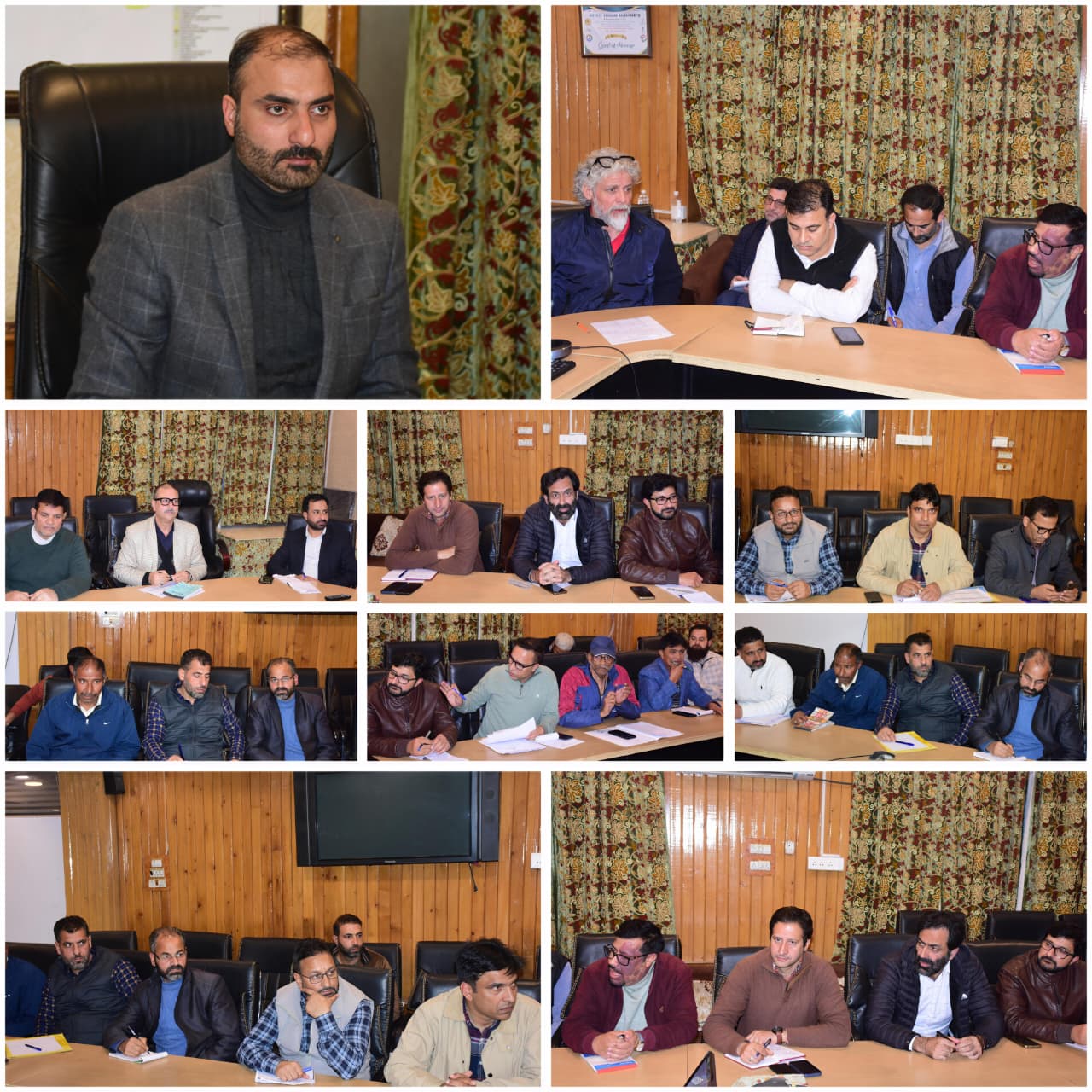
Srinagar, November 11: Commissioner, Srinagar Municipal Corporation (SMC), Dr Basharat Qayoom, IAS, on Tuesday reviewed the Corporation’s preparedness for the prevailing weather forecast and assessed follow-up action on directions issued during the previous review meeting.
The meeting, held at the SMC Central Office in Karan Nagar, focused on the availability of manpower and machinery, snow clearance arrangements and the functioning of field and monitoring teams.
It was attended by Joint Commissioner (Works), Joint Commissioner (H&S), F.A./Chief Accounts Officer, Superintending Engineer, Executive Engineers of various wings, Purchase and Procurement Officer, Chief Sanitation Officer, Stores Officer and other concerned officers.
Reviewing arrangements across the city, the Commissioner directed all concerned officers to ensure that field teams, machinery and essential equipment remain readily available to respond to any situation arising from adverse weather conditions. He stressed the need for close coordination among different wings to ensure prompt resolution of issues on the ground.
Regarding snow clearance, Dr Basharat directed that both manual and mechanised arrangements be maintained across all municipal wards. Major roads and important public routes, particularly those connecting hospitals, ration depots, shrines and government institutions, must be cleared on priority.
He also called for adequate manpower to undertake manual snow clearance in interior lanes, narrow streets, footpaths and areas inaccessible to snow clearance vehicles.
The Commissioner reviewed the SMC snow clearance fleet and was informed that vehicles sent for repairs had been repaired and were ready for deployment. He directed that all available vehicles and machinery, along with the required manpower, be kept ready to respond to snowfall.
The meeting was also informed that zonal- and ward-level teams had been constituted and were ready to deal with situations arising from adverse weather. The Commissioner stressed that these teams must remain in regular contact with their respective officers and monitoring mechanisms to ensure timely intervention.
Reviewing dewatering arrangements, he directed that all permanent dewatering stations remain functional and high-capacity mobile pumps be positioned at vulnerable and low-lying locations to address waterlogging caused by rainfall and snowmelt.
He also stressed the need for effective functioning of the Snow Monitoring Committee and the 24×7 Control Room. Both were directed to maintain regular contact with field teams and ensure that complaints relating to snow accumulation, blocked roads and waterlogging are immediately conveyed to the concerned officers for necessary action.
Dr Basharat called for close field supervision and directed officers to ensure there was no delay in mobilising resources wherever required. He emphasised that preparedness must translate into effective field arrangements, with clear coordination and accountability at every level.
The Commissioner directed all concerned wings to remain vigilant and maintain these arrangements throughout the winter season, with particular focus on timely snow clearance, effective dewatering and uninterrupted civic services. He stressed that a coordinated and prompt response would be essential to minimise public inconvenience during adverse weather conditions.